Schwerin Castle
-
Romanticism 90%
-
Gothic Revival 80%
-
Neo-Renaissance 75%
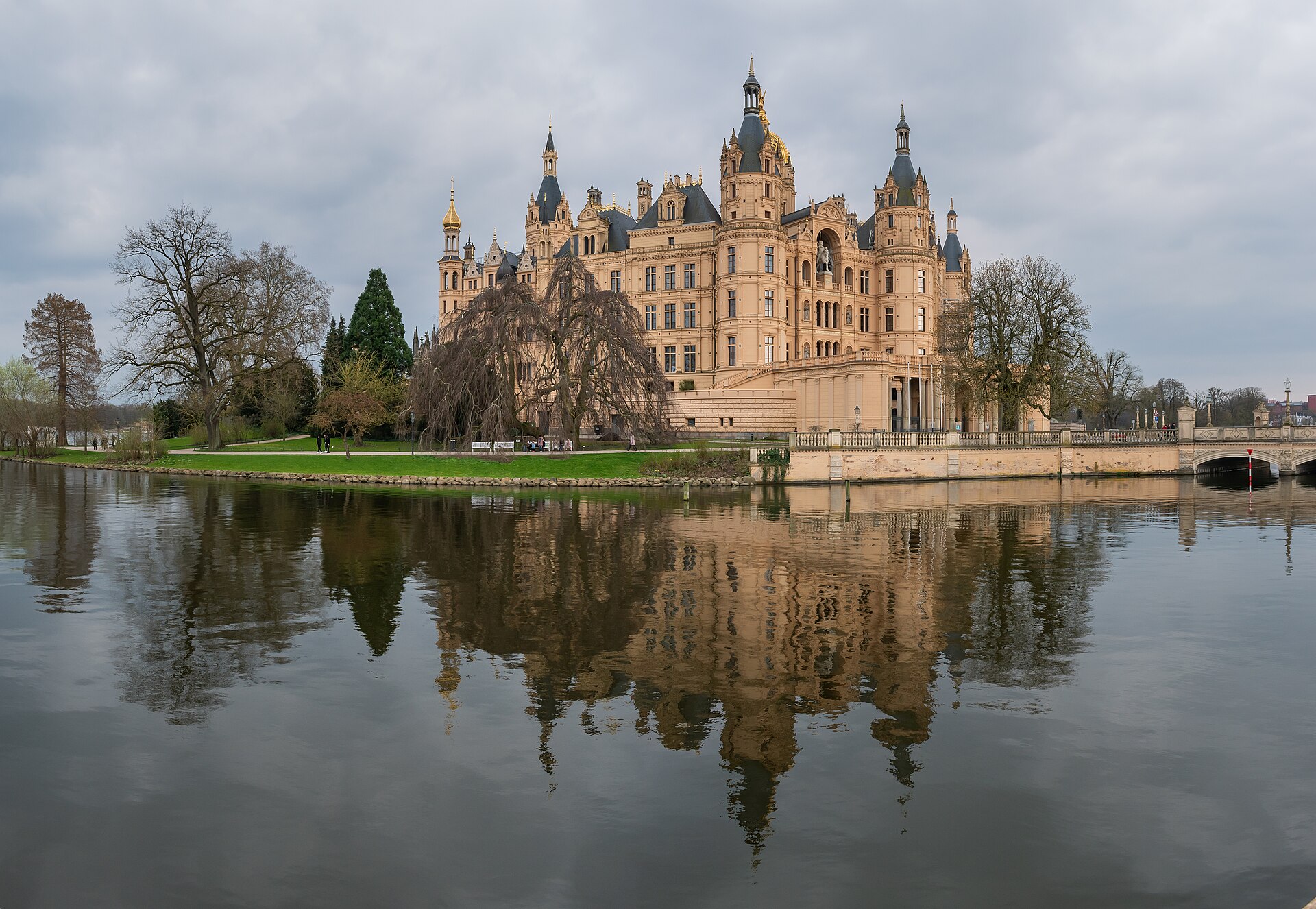
Schwerin Castle, located in Germany, is a remarkable example of Romantic architecture reflecting the ideals of historicism. The castle's design incorporates elements from various architectural styles, showcasing its grandeur and historical significance.
Architectural Styles
Romanticism
90%Romanticism in Schwerin Castle is evident in its imaginative forms, asymmetrical shapes, and whimsical towers. The use of varied materials and intricate details adds to the building's fairy-tale quality, evoking a sense of nostalgia for a romantic past.
- Asymmetrical towers
- Ornate decorative elements
- Use of local materials
- Dramatic rooflines
Gothic Revival
80%The Gothic Revival style manifests in the pointed arches, intricate stonework, and the vertical emphasis of the towers. These elements create a dramatic silhouette that seeks to evoke the grandeur of medieval architecture.
- Pointed arches
- Decorative spires
- Elaborate stone carvings
- Vertical lines
Neo-Renaissance
75%Neo-Renaissance influences are visible in the symmetrical facades and use of classical proportions. The embellishments include balconies and pilasters that harken back to the elegance of Renaissance architecture.
- Symmetrical facades
- Classical proportions
- Balconies
- Pilasters
Notable Features
- Surrounding lakes
- Ornamental gardens
- Interior art collections
- Golden dome
Historical Context
Built in the 19th century, Schwerin Castle served as a ducal residence and is a prominent example of the Romantic movement in architecture. It reflects the aspirations of the time to revive historical styles while adding a personal touch, resulting in a unique landmark.
Fun Facts
- The castle is situated on an island in Lake Schwerin.
- Schwerin Castle is often referred to as the 'Neuschwanstein of the North'.
- It is currently the seat of the state parliament of Mecklenburg-Vorpommern.
Frequently Asked Questions
What architectural style is Schwerin Castle?
Schwerin Castle is primarily Romanticism architecture (90% confidence), with elements of Gothic Revival and Neo-Renaissance. Romanticism in Schwerin Castle is evident in its imaginative forms, asymmetrical shapes, and whimsical towers. The use of varied materials and intricate details adds to the building's fairy-tale quality, evoking a sense of nostalgia for a romantic past.
When was Schwerin Castle built?
Schwerin Castle dates from 19th century.
Who designed Schwerin Castle?
Schwerin Castle was designed by Heinrich von Ferstel.
Where is Schwerin Castle located?
Schwerin Castle is located at Lennéstraße 1, 19053 Schwerin, Germany.
What are the notable features of Schwerin Castle?
Notable features include surrounding lakes, ornamental gardens, interior art collections, and golden dome.
Similar Style Buildings

Paleisstraat 2b, 2514 JA Den Haag
Gothic
N/A
Gothic
N/A
Gothic
N/A
Norman
N/A
Gothic
N/A
Art Deco
N/A
Neoclassical