Robie House, Grand Rapids, MI
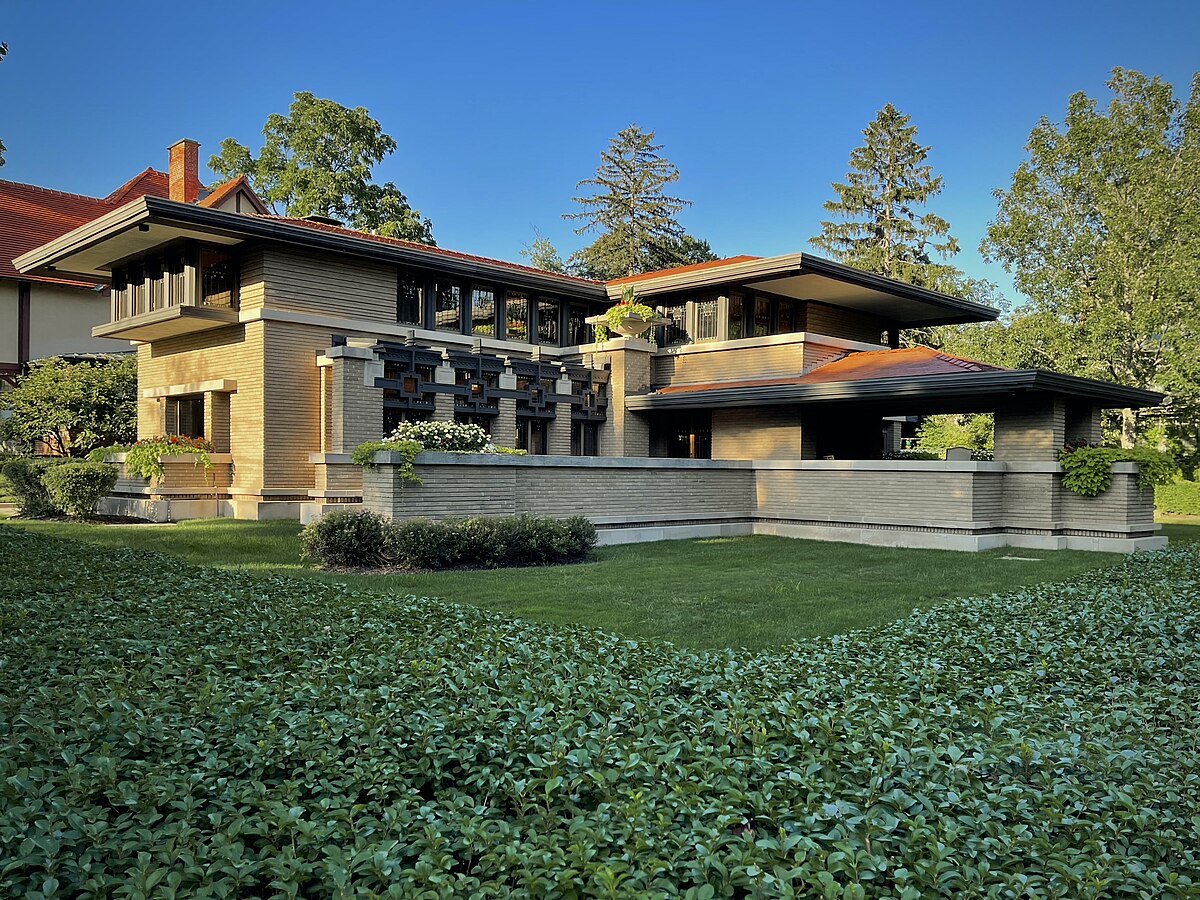
-
Prairie Style 90%
-
Arts and Crafts 80%
The Robie House is a quintessential example of Prairie-style architecture, known for its horizontal lines and integration with the landscape. It exemplifies Frank Lloyd Wright's philosophy of organic architecture, emphasizing harmony between human habitation and the natural world.
Architectural Styles
Prairie Style
90%The Prairie Style is evident in the low-profile design and extended horizontal lines of the building, which mimic the vast, flat landscape of the Midwest. Key elements include overhanging eaves, open floor plans, and a strong connection to the surrounding environment through ample windows.
- Low, horizontal rooflines
- Open floor plan
- Large overhanging eaves
- Integrative landscaping
- Use of natural materials
Arts and Crafts
80%This style is reflected in the building's emphasis on craftsmanship and the use of natural materials, creating a sense of authenticity and warmth. The detailed woodwork and fixtures within the house highlight the commitment to artisanal quality.
- Exposed wooden beams
- Decorative tiles
- Handcrafted details
- Built-in furniture
- Natural stone elements
Notable Features
- Cantilevered roof sections
- Geometric stained glass windows
- Custom-designed furniture and fixtures
- Integration with surrounding landscape
Historical Context
Built in 1910, the Robie House is a pivotal example of the Prairie School movement, which sought to create a distinctly American style of architecture. Reflecting early 20th-century ideals of harmony with nature, it became a significant influence on modern architecture and is recognized as a National Historic Landmark.
Fun Facts
- The house was designed for Frederick C. Robie, a wealthy businessman, and remains one of Wright's most celebrated works.
- It features more than 300 square feet of stained glass artwork.
- Robie House was once at risk of being demolished but was saved through community efforts and preservation initiatives.
Frequently Asked Questions
What architectural style is Robie House?
Robie House is primarily Prairie Style architecture (90% confidence), with elements of Arts and Crafts. The Prairie Style is evident in the low-profile design and extended horizontal lines of the building, which mimic the vast, flat landscape of the Midwest. Key elements include overhanging eaves, open floor plans, and a strong connection to the surrounding environment through ample windows.
When was Robie House built?
Robie House dates from 1910.
Who designed Robie House?
Robie House was designed by Frank Lloyd Wright.
Where is Robie House located?
Robie House is located at 450 Madison Ave SE, Grand Rapids, MI 49503.
What are the notable features of Robie House?
Notable features include cantilevered roof sections, geometric stained glass windows, custom-designed furniture and fixtures, and integration with surrounding landscape.
Similar Style Buildings

N/A
Critical Regionalism
N/A
Arts and Crafts
Kon. Emmaplein 1, 2518 RH Den Haag
Arts and Crafts
N/A
Colonial Revival
N/A
Arts and Crafts
N/A
Arts and Crafts
N/A
Colonial Revival