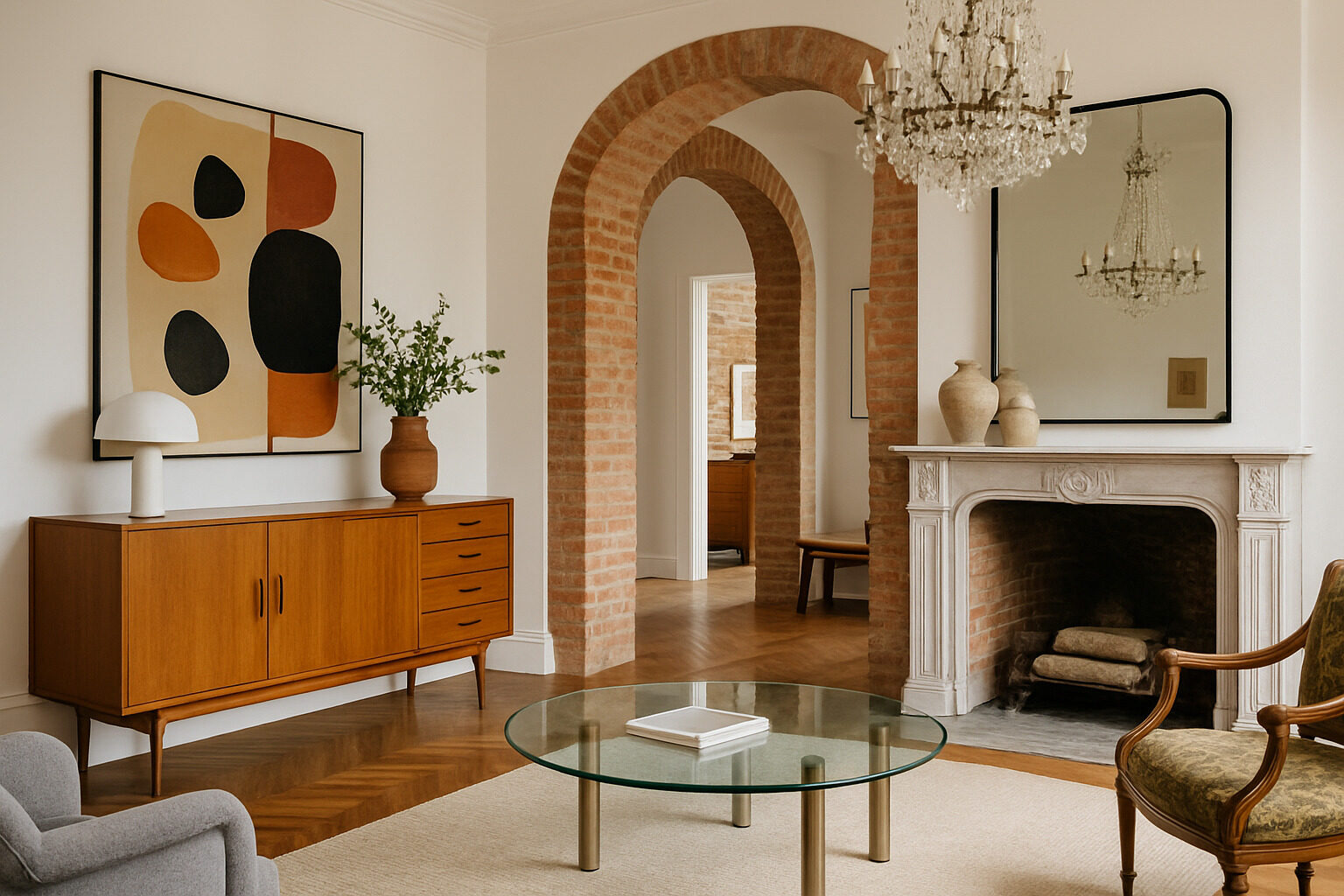
Freestyle interior design is the deliberate mixing of styles, eras, and influences in one home — Danish chairs beside a Victorian mirror, a rustic farm table under a contemporary pendant — held together not by a rulebook but by a point of view. It is often called eclectic design, but "freestyle" captures the spirit better: like a freestyle in music or sport, it looks improvised while actually depending on strong underlying technique.
Done well, a freestyle interior feels layered, personal, and collected over a lifetime. Done carelessly, it feels like a thrift store exploded. The difference is never the individual pieces; it is the connective tissue between them. This guide covers the techniques that turn a mix into a composition.
Why Mix Styles at All?
Single-style rooms photograph neatly but often feel like showrooms — complete, closed, and a little anonymous. Mixing solves three problems at once. It makes rooms personal, because only your history produces your particular combination. It makes rooms durable, because a home that already contains multitudes absorbs new pieces and passing trends without collapsing. And it makes rooms interesting, because contrast is what gives any composition energy: rough against polished, old against new, ornate against spare. The entire value of a gilded frame doubles when it hangs on a plain modern wall.
Restyle your own space with AI
Upload a photo of your room or home and see it reimagined in any style from this article. Your first restyle is free, no account needed.
Restyle My Space
Find Your Thread Before You Mix
Freedom needs a spine. Before combining anything, decide what will stay constant while everything else varies. Successful freestyle rooms usually hold at least two of these threads steady:
- A disciplined palette. This is the single most powerful unifier. Three to five colors, repeated across eras — a 1970s leather chair and an antique rug stop arguing the moment they share a rust tone.
- A consistent mood. Calm, moody, playful, refined. A serene Japanese screen and a serene Shaker bench mix easily; a serene screen and a loud pop-art print need more careful handling.
- Repeated materials. If warm wood, aged brass, and linen each appear several times around the room, pieces from any century will feel related.
- A shared level of formality. Rustic and refined can mix, but wildly different formality in equal doses reads as indecision. Let one temperament lead.
If you cannot yet name your thread, that is worth solving first — a tool like our style finder helps you identify the styles you consistently respond to, which usually reveals the common denominators hiding underneath.
The Working Rules of a Good Mix
Let one style lead
An even fifty-fifty split between two styles creates tension without resolution. A common approach is to let one aesthetic set the foundation — roughly the architecture, large furniture, and wall treatment — while the second and third styles arrive as accents: seating, art, lighting, objects. The room reads as "modern with antique moments" or "traditional with contemporary edge," which the eye parses instantly.
Repeat everything at least twice
A single ornate item in a plain room looks like an accident. Two or three ornate items, distributed around the space, look like a decision. This repetition rule applies to color, material, era, and shape — echo any bold choice at least once elsewhere, even in a small way, and it becomes intentional.
Manage scale and silhouette
Pieces from different eras coexist happily when their proportions converse: similar seat heights around a table, similar visual weight flanking a sofa. Mix silhouettes deliberately — leggy mid-century pieces open up heavy antique casegoods; a round table softens a room of rectangles.
Leave negative space
Mixed rooms carry more visual information per square foot than single-style rooms, so they need more silence to stay legible: bare wall sections, an unstyled tabletop, breathing room around furniture. When a freestyle room feels chaotic, the fix is usually subtraction, not rearrangement.
Mixing Eras: A Quick Compatibility Guide
| Combination | Why it works | Watch out for |
|---|
| Mid-century modern + antique traditional | Clean lines flatter ornament; warm woods bridge both | Too many dark heavy pieces sinking the room |
| Industrial + romantic vintage | Hard/soft contrast; metals patina alike | Cold materials outnumbering soft ones |
| Minimalist + global/collected | Spare backdrop showcases artifacts | Clutter creeping past curation |
| Coastal or colonial + contemporary | Natural fibers freshen crisp modern shells | Theme drifting into costume |
| Retro-futurist + traditional bones | Maximum contrast, maximum energy | Needs a very tight palette to cohere |
For deep dives into two very different vocabularies you can raid for a mix, see our guides to British Colonial decor — a historically freestyle blend of European furniture and tropical materials — and cyberpunk apartment style at the opposite end of the spectrum.
Common Freestyle Mistakes
- Mixing without a thread. Variety in color, material, mood, and era simultaneously — vary some, hold others constant.
- Buying "interesting" instead of "belonging." Every piece should earn its place in this room, not just be great in isolation.
- Equal styling everywhere. Give the room one or two high-intensity moments and let other zones stay quiet.
- Ignoring the architecture. The bones are a style voice too. A Victorian bay window or concrete loft ceiling should be treated as the first piece in the mix.
- Finishing too fast. Collected rooms need time. Leave gaps for the pieces you have not met yet.
A Practical Way to Start
If you are staring at a room wondering where to begin, work in this order. First, choose your anchor piece — the largest or most beloved item, whether that is a sofa, a rug, or an inherited armoire — and pull your palette from it. Second, audit what you already own against that palette and mood; anything that fights both goes to another room. Third, introduce contrast deliberately: one piece from a different era than the anchor, placed prominently, then echoed by a smaller cousin across the room. Fourth, layer lighting and textiles last, using them to knit the mix together — a lamp with an old brass base and a modern shade is a bridge in a single object. Working anchor-outward keeps every purchase accountable to something real, which is what separates a collected room from an accumulated one.
Test the Mix Before You Commit
The hardest part of freestyle design is that it resists prediction — a combination that sounds wrong on paper can sing in person, and vice versa. Prototype cheaply: build a mood board, live with big decisions taped to the wall, and use our AI restyle tool to upload a photo of your actual room and see it re-rendered with different style blends before you spend anything. Seeing your real light and proportions wearing a new mix answers in seconds what swatches never quite settle.
Freestyle interiors reward the designer who is both brave and disciplined: brave in combinations, disciplined in palette, repetition, and restraint. Hold the thread, let one voice lead, echo every bold move — and the room stops being a collection of things and becomes unmistakably yours.
Restyle your own space with AI
Upload a photo of your room or home and see it reimagined in any style from this article. Your first restyle is free, no account needed.
Restyle My Space