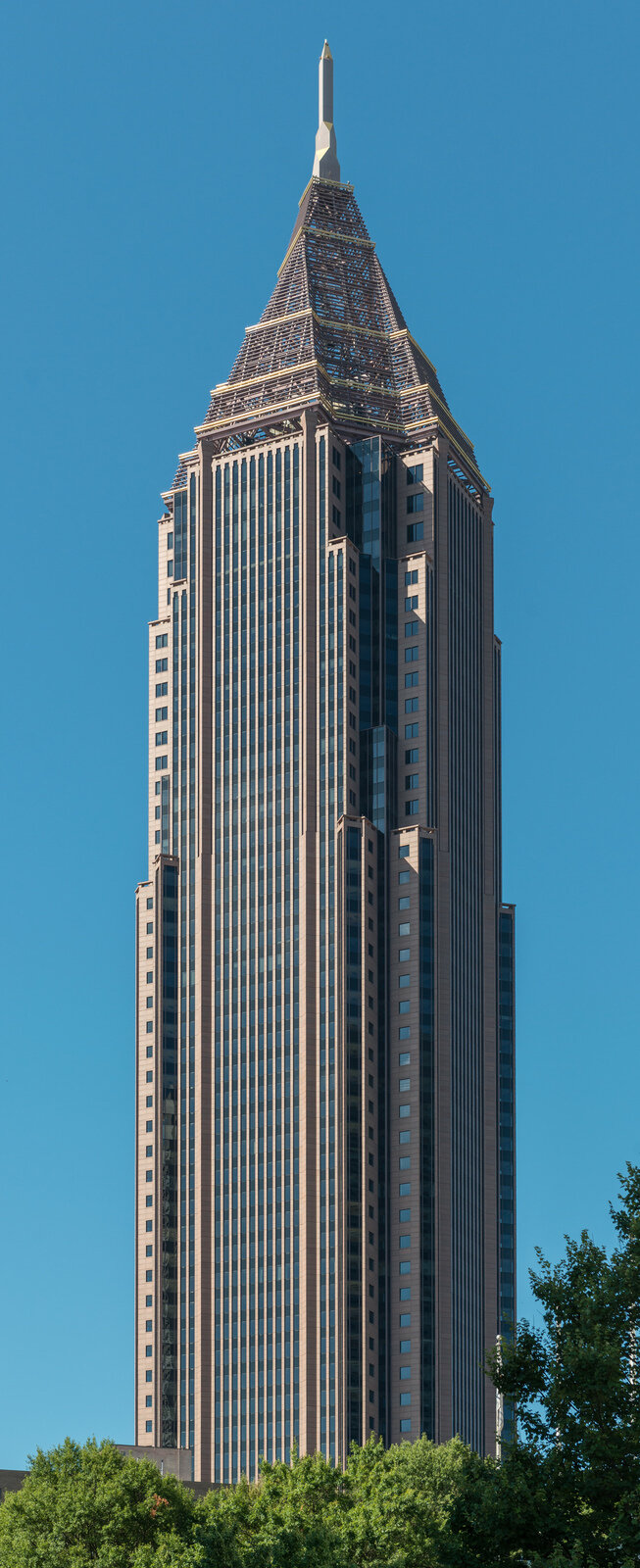
Atlanta rises as the South's architectural phoenix, its skyline a testament to continuous reinvention from antebellum origins through Civil War destruction to New South prosperity and modern corporate dominance. The city's architecture tells the story of American ambition—from the gold dome of the Georgia State Capitol anchoring downtown to the gleaming towers of Peachtree Street stretching northward, Atlanta embodies architectural optimism and forward momentum.
What makes Atlanta architecturally distinctive is its embrace of the new while honoring selective pieces of its past. Sherman's march and subsequent urban renewal erased much historic fabric, creating opportunities for bold architectural statements. The result is a city where antebellum Swan House shares skyline views with postmodern Bank of America Plaza, where John Portman's revolutionary Peachtree Center towers neighbor Philip T. Shutze's classical Revival temples.
Atlanta's architecture reflects its role as the South's business capital and transportation hub. Fortune 500 headquarters demand architectural distinction, Olympic venues required international scale, and suburban sprawl created opportunities for innovative urban planning. The city's buildings serve as corporate monuments and civic symbols, creating an architectural landscape where commerce and culture intersect.
From Reconstruction to Corporate Towers
The Reconstruction era (1870s-1890s) established Atlanta's civic architecture with the Indiana limestone Georgia State Capitol and its distinctive gold dome. The New South period (1900s-1920s) brought theaters like the exotic Fox Theatre with its Moorish Revival grandeur and atmospheric ceiling, alongside Philip T. Shutze's refined classicism at Swan House and the Temple.
The mid-century corporate boom (1960s-1980s) transformed Atlanta's skyline with early modernist landmarks like the CNN Center's massive atrium and the Coca-Cola Building's sleek international style facade. The 1990s corporate tower competition produced the city's tallest buildings—Bank of America Plaza and 191 Peachtree Tower—while Olympic preparation added venues like Mercedes-Benz Stadium with its revolutionary retractable roof.
Architectural Districts
Downtown Atlanta centers on the State Capitol and extends north along Peachtree Street, where Portman's cylindrical towers created the template for Atlanta's distinctive skyline. The corridor features the city's densest collection of corporate headquarters, from CNN's broadcasting complex to Coca-Cola's modernist monument.
Midtown Atlanta balances corporate towers with cultural institutions, anchored by Richard Meier's white porcelain-paneled High Museum of Art and its Renzo Piano expansion. Historic neighborhoods like Inman Park preserve Victorian architecture, while Buckhead combines luxury residential towers with corporate campuses set in forested landscapes that give Atlanta its "City in a Forest" character.
Architectural Voices
John Portman revolutionized urban planning with Peachtree Center, proving that mixed-use developments and cylindrical towers could create urban excitement. His atrium hotels and shopping complexes influenced development patterns across America. Philip T. Shutze brought refined classicism to Atlanta's elite institutions, designing Swan House and the Temple with scholarly precision that elevated local architectural standards.
Richard Meier's High Museum demonstrated how modernist architecture could enhance rather than compete with urban context, while contemporary architects like Renzo Piano have shown how additions can honor and transform existing buildings. Corporate architects from Skidmore, Owings & Merrill to Johnson/Burgee created the postmodern towers that define Atlanta's distinctive stepped skyline.
What to Notice
Atlanta's architecture reveals itself through materials and form. Notice how the city's corporate towers use granite, glass, and metal in distinctive combinations—Bank of America Plaza's golden facade catching sunset light, 191 Peachtree Tower's stepped crown creating a distinctive silhouette. The contrast between cylindrical Portman towers and angular postmodern competitors creates dynamic skyline relationships.
Look for Atlanta's approach to integrating architecture with landscape—buildings set among forests of hardwood trees, parking decks hidden by berms and plantings, courtyards that take advantage of the mild climate. From the Fox Theatre's fantastical interior to the High Museum's natural light galleries, Atlanta rewards visitors who look beyond facades to discover how buildings create experiences. The city's architecture reflects Southern hospitality through grand entrances, generous public spaces, and buildings designed for both business and celebration.
Architectural styles in Atlanta
Browse the documented buildings by style:
Atlanta Architecture FAQ
What is the dominant architectural style in Atlanta?
Atlanta's architecture is predominantly characterized by contemporary styles, but it also features modernism, skyscrapers, and Beaux-Arts elements. The city's skyline showcases a blend of these styles, reflecting its history and evolution from antebellum structures to modern corporate architecture.
What are the best areas to walk and see architecture in Atlanta?
Peachtree Street is an excellent area for walking, offering a mix of skyscrapers and historic buildings. The downtown area, particularly around the Georgia State Capitol and the Fox Theatre, provides opportunities to experience both contemporary and classic architectural styles.
What are some of the oldest or most famous buildings in Atlanta?
Notable historic buildings include the Georgia State Capitol, known for its gold dome, and the Fox Theatre, celebrated for its Moorish Revival design. The Swan House is also a significant example of Beaux-Arts architecture, highlighting Atlanta's rich architectural heritage.
How does Atlanta's architecture compare to nearby cities?
Atlanta's architecture is unique due to its blend of contemporary and historic styles, reflecting its role as the South's business capital. Compared to cities like Savannah, which is known for its preserved historic architecture, Atlanta showcases a more modern skyline alongside select historic landmarks.
Can notable buildings in Atlanta be visited?
Many iconic buildings in Atlanta, such as the Georgia State Capitol and the Fox Theatre, are open to visitors. Guided tours are often available, allowing guests to explore the architectural details and historical significance of these landmarks.


