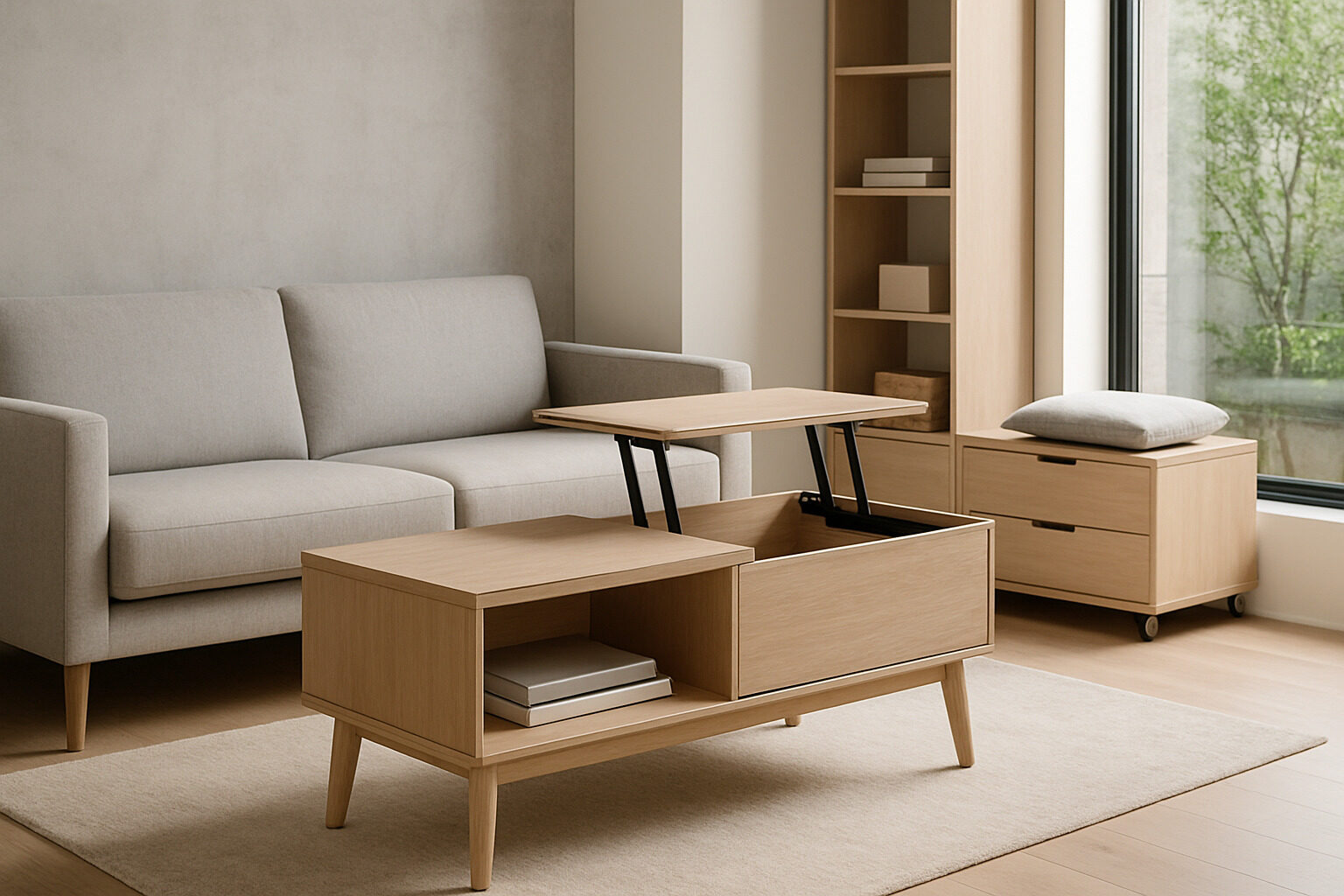
Intelligent furniture design is the discipline of making pieces that do more than one job without looking like they are trying — furniture where aesthetics and function are designed together rather than traded off. A storage bed that reads as a clean platform, a desk that folds into a wall panel, an ottoman that is also a table and a spare seat: the intelligence is not gadgetry, it is problem-solving embedded in the object's form. This guide explains the principles behind smart, multifunctional furniture, the main categories worth knowing, and how to choose pieces that will actually earn their keep in your home.
The subject matters most in small homes, where every piece must justify its footprint, but the underlying idea — furniture as a solution rather than a filler — improves rooms of any size.
The Core Principles of Intelligent Furniture Design
- Dual purpose without dual clutter. A good multifunctional piece performs its second job invisibly until needed. If the mechanism, hinges, or storage announce themselves constantly, the design has failed aesthetically no matter how clever it is.
- Honest primary function. The best convertibles are excellent at their main role first. A sofa bed that is a mediocre sofa and a mediocre bed is not intelligent design; it is two compromises stapled together.
- Effortless transformation. Functions people must wrestle with go unused. The test is whether the change of mode takes seconds, one person, and no instructions.
- Proportion and visual lightness. Multifunction tends to add bulk. Smart designs counteract it with raised legs, slim profiles, and unified color so the piece sits lightly in the room.
- Durability at the moving parts. Hinges, lifts, rails, and casters are where multifunctional furniture lives or dies. Solid hardware is the difference between a ten-year piece and a one-year regret.
Restyle your own space with AI
Upload a photo of your room or home and see it reimagined in any style from this article. Your first restyle is free, no account needed.
Restyle My Space
The Main Categories, Compared
| Category | What it does | Best for | Watch for |
|---|
| Storage seating (ottomans, benches, storage sofas) | Hides bulky items inside seats | Living rooms, entries, bedrooms | Lids that are awkward to lift with one hand |
| Convertible sleepers (sofa beds, daybeds, murphy beds) | Turns living space into guest space | Studios, home offices, guest rooms | Comfort in the secondary mode |
| Extending and nesting tables | Scales surface area to the occasion | Small dining areas, multipurpose rooms | Stability when fully extended |
| Fold-away workspaces | Closes the office out of sight | Bedrooms and living rooms doing office duty | Cable and clutter handling when closed |
| Modular systems | Reconfigures as needs change | Renters, growing families | Proprietary parts you cannot rebuy later |
| Vertical hybrids (loft beds, bunk-desk units) | Stacks functions in the same footprint | Kids' rooms, studios with height | Ceiling clearance and ladder safety |
Aesthetic Strategies: Making Function Look Good
Function alone does not make furniture intelligent — plenty of clever pieces are ugly. The designs that succeed visually tend to use a few recurring strategies. Concealment: storage and mechanisms disappear behind clean planes, so the piece reads as simple even though it is not. Expression: the opposite move, where the mechanism becomes the beauty — exposed wood joinery on a folding table, visible pivots machined like jewelry. Material continuity: when one piece serves two zones (a shelf that becomes a desk), keeping a single material family lets it belong to both. Sculptural neutrality: multifunctional pieces move and change shape, so quiet forms and solid colors survive every configuration, while loud patterns often look wrong in one of the modes.
Whichever strategy a piece uses, judge it in every state it can occupy. Showrooms and product photos favor the closed, tidy mode; you will live with both.
Designing a Room Around Multifunctional Pieces
Intelligent furniture changes layout logic. Because pieces transform, the room must reserve the space they transform into: clearance for the sofa bed to unfold, wall access for the drop-leaf to rise, floor area where nesting tables land when separated. Map the room in its "expanded" state first, then arrange for the everyday compact state. A few further rules of thumb:
- One hero transformer per room. A room where everything folds, flips, and rolls feels like a puzzle. Let one major piece carry the transformation load and keep companions simple.
- Pair hidden storage with a strict sorting rule. Storage ottomans become junk pits without an assigned category — blankets, toys, seasonal items.
- Think in zones, not rooms. Multifunctional furniture is what lets one room hold two zones — sleep and work, dine and play. Anchor each zone with lighting and a rug so the functions feel separate even when the furniture is shared.
Angled and awkward rooms benefit most from this thinking — our guide to angled bed ideas and small-room solutions shows the same footprint logic applied to bedrooms, and our mudroom layout tips apply it to the hardest-working few square meters in the house.
Materials and Longevity
Because multifunctional pieces endure more handling than static furniture — lifted lids, extended leaves, folded frames — material choices carry extra weight. Solid wood and plywood tolerate repeated stress at joints far better than particleboard, which crumbles around screws that move daily. Metal frames earn their place in fold-away and lifting mechanisms, where rigidity under load matters. Upholstery on convertible pieces should be removable or at least tightly woven and cleanable, since sleeper sofas and storage benches see double the wear of their single-purpose cousins. And finishes should age gracefully rather than perfectly: a piece touched twenty times a day will patina, so oiled wood and textured surfaces that absorb small marks outlast high-gloss finishes that record every fingerprint. Paying for material quality in a multifunctional piece is not a luxury; it is the price of the second function actually surviving.
How to Evaluate a Piece Before You Buy
Run any candidate through five questions. Does it excel at its primary job? Can you operate the transformation alone, quickly, without thinking? Is the hardware metal and serviceable rather than plastic and sealed? Does it look intentional — not like a machine in disguise — in both states? And does its expanded state actually fit your room with circulation to spare? A piece that passes all five is genuinely intelligent design; a piece that passes three is a compromise you should price accordingly.
See It in Your Space First
The final intelligence test is contextual: the same storage bed that looks sleek in a bright showroom can overwhelm a small bedroom with low light. Before committing, photograph your room and use our AI restyle tool to visualize it refurnished in the direction you are considering — cleaner-lined, more compact, differently arranged. It is a fast way to check whether the aesthetic half of the equation holds up in your actual space, which is, after all, the only room that matters.
Aesthetic meeting function is not a slogan; it is a checklist. Honest primary function, effortless transformation, hidden bulk, durable hardware, and a form you would want even if it did only one thing. Furniture that clears that bar does not just save space — it quietly upgrades how the whole home works.
Restyle your own space with AI
Upload a photo of your room or home and see it reimagined in any style from this article. Your first restyle is free, no account needed.
Restyle My Space