Postmodernism Architecture in Philadelphia
Explore 3 postmodernism buildings that shape Philadelphia's architectural identity
Postmodernism emerged in Philadelphia during a period of economic revitalization and urban renewal in the late 20th century. As the city sought to redefine its architectural identity, this style became a canvas for experimentation, combining playful elements with contextual references to the city’s historical fabric. The juxtaposition of traditional and contemporary design offered a fresh perspective on Philadelphia’s architectural landscape.
One prominent example is One Liberty Place, located at 1650 Market St. This skyscraper features a pyramid-like apex that nods to traditional architectural forms while presenting a modern interpretation. The playful geometric shapes and contrasting materials create a dialogue with the historical context of the city, emphasizing the transition from its storied past to a contemporary future.
Another significant structure is the Comcast Technology Center at 1800 Arch St. This building exemplifies postmodernism through its bold geometric forms and distinct materials, enhancing the visual impact of the Philadelphia skyline. The unconventional roofline and playful interpretations of classical elements contribute to its status as a modern landmark.
The Kimmel Center, located at 300 S Broad St, also showcases postmodern elements with its blend of modern and historical references. The design incorporates traditional forms and materials in a way that creates a conversation between the past and present, enriching the cultural landscape of Philadelphia and contributing to the city’s unique architectural identity.
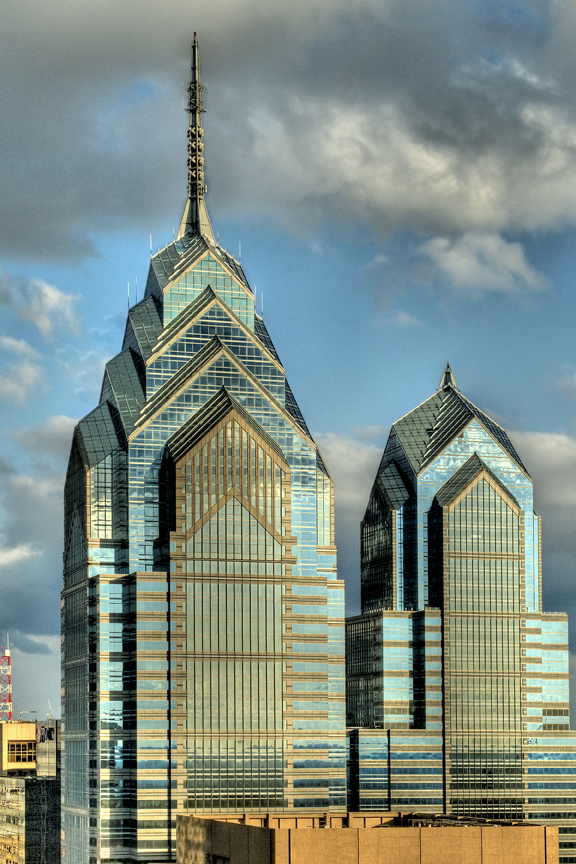
One Liberty Place
1650 Market St, Philadelphia, PA 19103
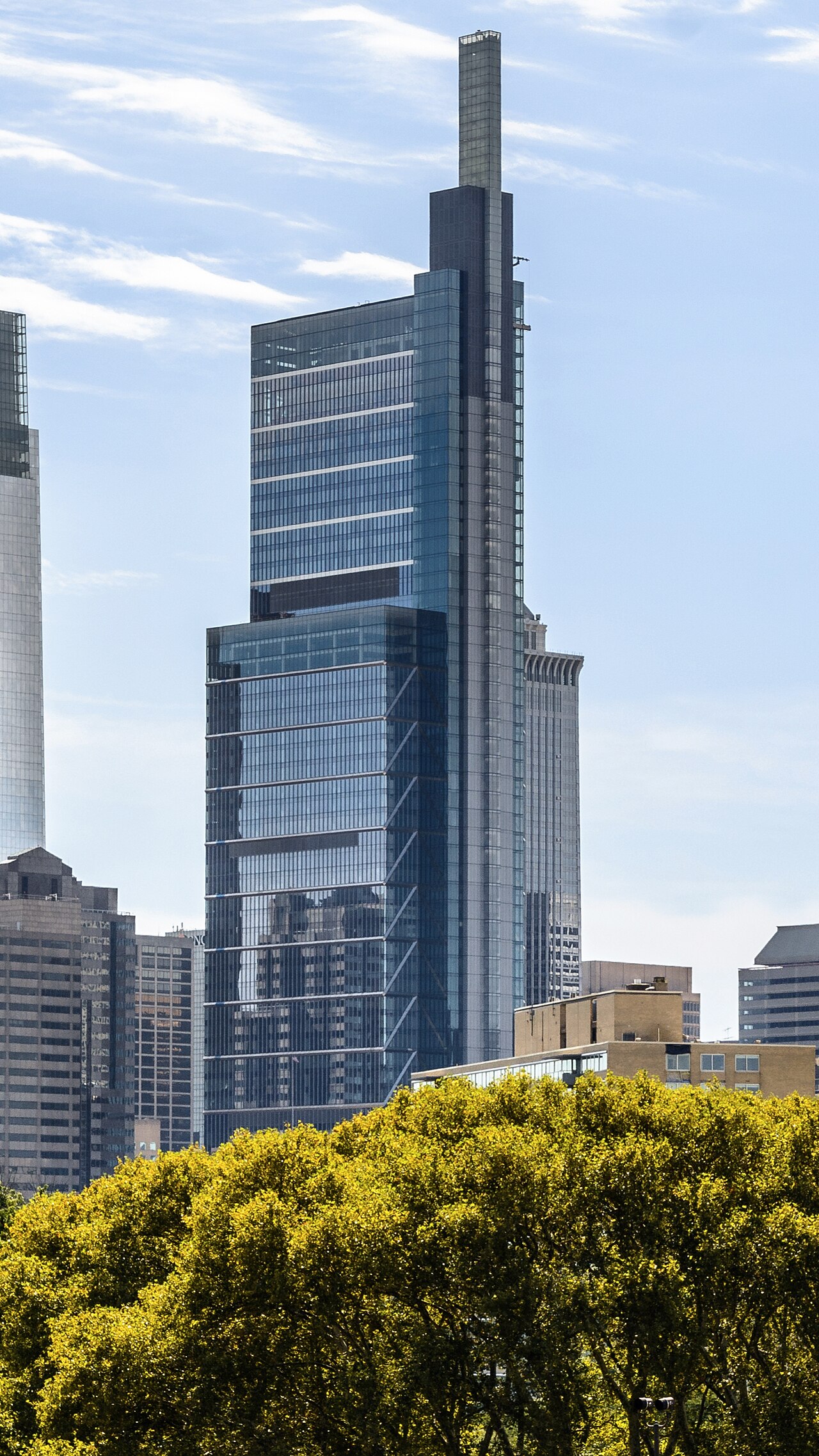
Comcast Technology Center
1800 Arch St, Philadelphia, PA 19103
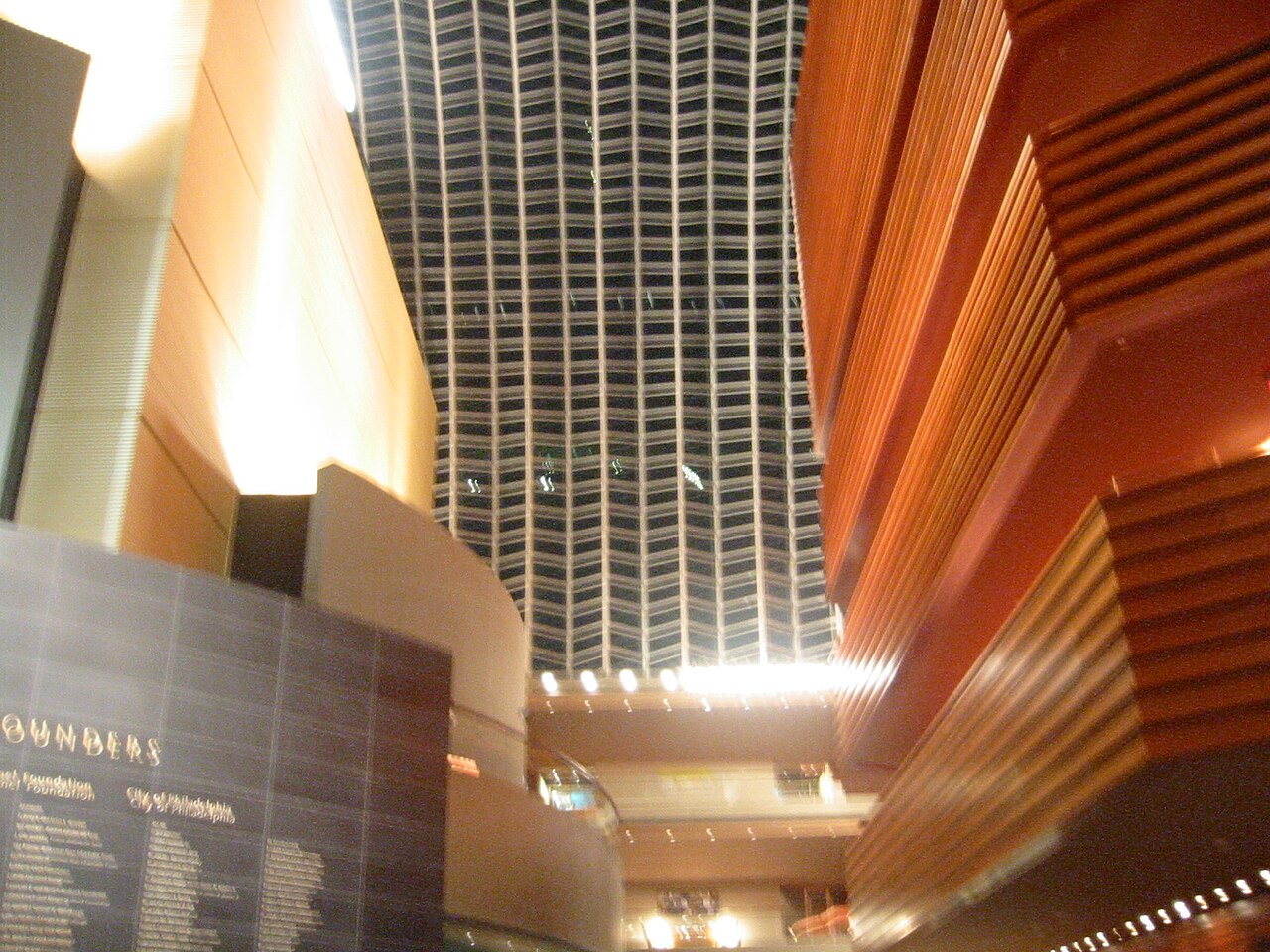
Kimmel Center
300 S Broad St, Philadelphia, PA 19102
Postmodernism in Philadelphia: Common Questions
Where can I see Postmodern architecture in Philadelphia?
You can see Postmodern architecture primarily in the Center City area, particularly along Market and Arch Streets. Notable buildings include One Liberty Place, Comcast Technology Center, and the Kimmel Center.
When were these Postmodern buildings built?
One Liberty Place was completed in 1990, the Comcast Technology Center was finished in 2018, and the Kimmel Center was inaugurated in 2001. Each building showcases the evolution of Postmodern design in Philadelphia.
What should I look for in Postmodern buildings?
Look for playful geometric shapes, unconventional rooflines, and a mix of materials that create visual interest. Buildings like One Liberty Place and the Comcast Technology Center feature bold forms and references to classical architecture.
How does Philadelphia's Postmodern architecture compare to other cities?
Philadelphia's Postmodern architecture reflects local historical contexts while embracing bold design choices. Compared to cities like New York or Chicago, Philadelphia's examples often incorporate elements that dialogue with the city's historical buildings.
Can I visit these Postmodern buildings?
Yes, all three documented Postmodern buildings, One Liberty Place, Comcast Technology Center, and Kimmel Center, are accessible to the public. You can explore their exteriors and in some cases, interior spaces during designated hours.