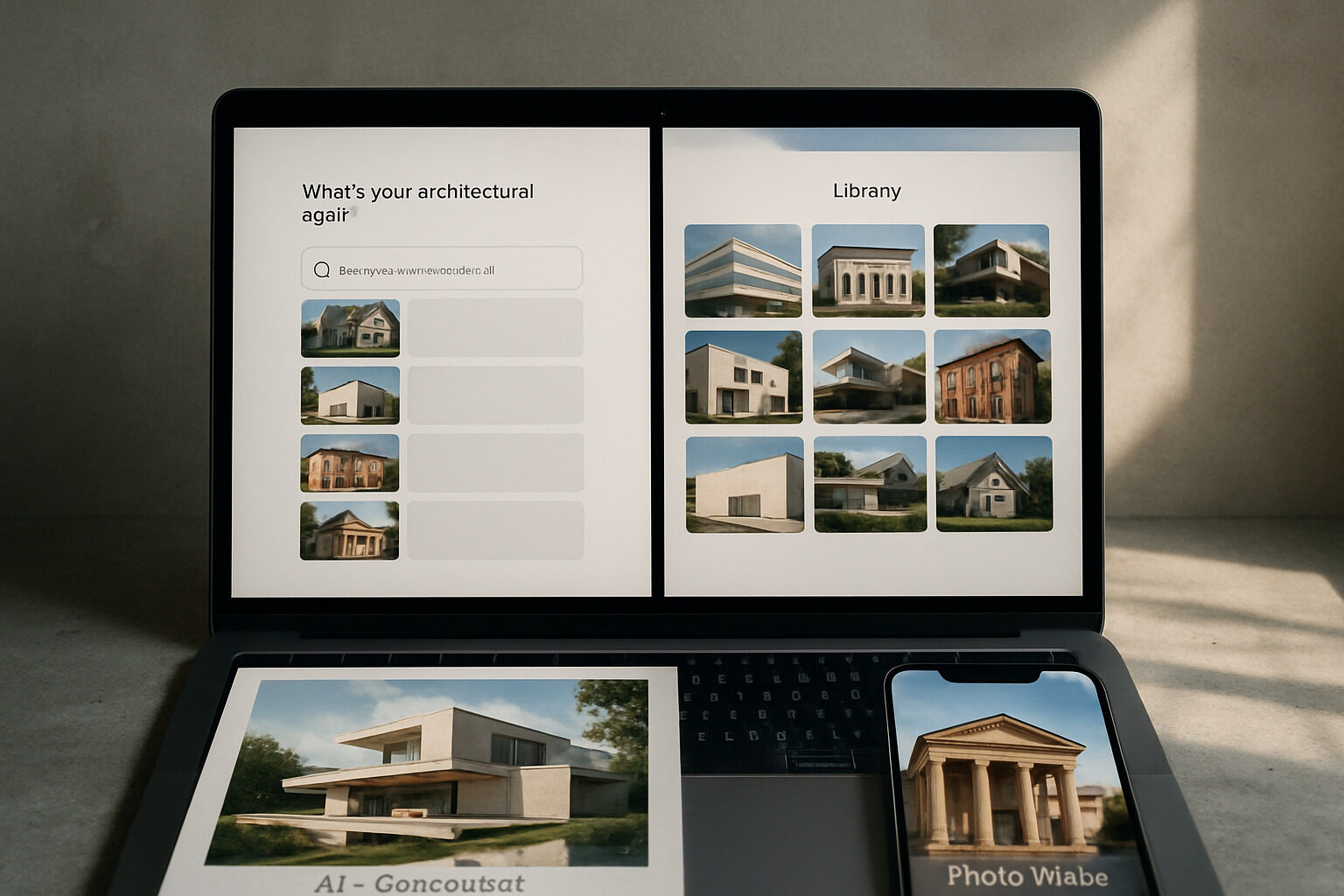
An architectural inspiration finder is any systematic method — or tool — for discovering building styles, forms, and details that fit what you are trying to create, instead of waiting for inspiration to strike. The fastest version today combines three steps: identify your taste with a style quiz, study real examples in a building library, and generate original concepts with an AI architecture designer. Around that core, photo walks, precedent studies, and a well-organized personal library keep the ideas flowing.
This guide lays out the full system: the tools that shortcut the search, the analog habits that deepen it, and how to organize what you find so it is usable when a real project starts.
Why "Just Browse for Ideas" Fails
Endless scrolling produces saved images, not direction. The problem is that most people search for inspiration without knowing what they are looking for, so everything appealing gets saved and nothing coheres. A working inspiration system inverts this: first name your taste, then gather examples that test and refine it, then generate variations to explore the edges. Each stage feeds the next, and the output is a brief you can act on — or hand to an architect — rather than a folder of pretty strangers.
Step 1: Name Your Taste With a Style Quiz
Most people can point at buildings they love long before they can name why. That vocabulary gap is worth closing first, because every later search works better with the right terms. Our style finder quiz walks you through a series of visual choices and identifies the architectural styles you are consistently drawn to — modern, craftsman, Mediterranean, brutalist, and so on. Ten minutes of quiz beats ten hours of unfocused scrolling, because "I like clean horizontal lines, deep overhangs, and natural materials" is searchable, discussable, and briefable in a way "I'll know it when I see it" never is.
Step 2: Study Real Examples in a Building Library
With styles named, ground them in real buildings. The building library collects notable architecture organized so you can browse by style and study what actually defines each one — massing, rooflines, window patterns, materials. The goal at this stage is pattern recognition: after fifteen examples of a style you can identify its essential moves versus its decorative ones, which is exactly the knowledge you need to adapt a style to your own project rather than copying a single photo of it.
When you encounter a building in the wild — or in a photo — that you cannot classify, that is a feature, not a bug: analyze it. Upload the photo to the AI architecture explorer and it will identify the style, era, and distinguishing elements for you. The first analysis is free with no account, and it turns every unfamiliar building into a lesson.
Step 3: Generate Concepts With AI
Study tells you what exists; generation shows you what could. Our AI architecture designer creates original architecture images from your direction — combine the style vocabulary from your quiz results with your site, program, and material preferences and iterate freely. The practical power is speed of variation: twenty concepts exploring one idea in an afternoon, keeping the three that spark something and feeding what you learned back into the next round. Treat generated images as conversation pieces and direction-setters, not construction documents, and they earn their place in any serious process.
The Analog Layer: Photo Walks and Field Observation
Digital tools accelerate the search, but walking a neighborhood with your phone camera still surfaces things no library holds: how a material weathers locally, how a porch actually gets used, how light falls on a facade at 6 p.m. in your latitude. Make the walk systematic — pick a neighborhood known for a style you are exploring, photograph whole buildings and details separately, and note what stops you. Then close the loop by running your best finds through the architecture explorer to name what you captured.
Comparing Inspiration Methods
| Method | Speed | Depth | Best For |
|---|
| Style quiz | Minutes | Directional | Naming your taste and getting search terms |
| Building library browsing | Hours | High | Learning what defines each style |
| AI photo analysis | Seconds per image | High per building | Decoding specific buildings you love |
| AI concept generation | Minutes per batch | Exploratory | Testing combinations that don't exist yet |
| Photo walks | Half a day | Deep, local | Context, materials, and lived detail |
| Books and magazines | Slow | Curated | Editorial depth and historical grounding |
No single method suffices. The quiz gives direction, libraries give literacy, generation gives range, and walks give ground truth — a strong inspiration practice cycles through all four.
Organize Finds Into a Usable Brief
Inspiration only pays off if you can retrieve it. Keep the system light:
- One place per project. A single folder or board per project, not a general "architecture" dump that grows forever.
- Caption everything. One line on why you saved it — "roofline," "window rhythm," "this exact brick." Uncaptioned saves lose their meaning within weeks.
- Cull weekly. Delete images that no longer fit the direction. A board of thirty coherent images is a brief; three hundred mixed ones is noise.
- Extract principles. Periodically write the three to five recurring themes. Those sentences — not the images — are what you brief an architect, builder, or AI generator with.
Adapting Inspiration to a Real Project
The gap between a beautiful board and a buildable direction is adaptation, and it is where most inspiration dies. Three filters help. Climate: a style born in one climate needs translation in another — deep Mediterranean overhangs mean something different in a rainy northern city, so identify which elements of your chosen style are essential to its character and which were solutions to someone else's weather. Budget: every style has expensive signatures and affordable ones; a craftsman feel can come from proportions and a well-detailed porch even when hand-carved brackets are out of reach, so rank your saved details by impact per dollar. Context: check what the neighboring buildings are doing, not to copy them but to decide consciously whether you are harmonizing or contrasting. Run your shortlist of images through these three filters and annotate what survives — that annotated survivor list is worth more than the original board ten times over.
A One-Week Starter Plan
- Day 1: Take the style quiz and write down your top styles.
- Days 2–3: Browse those styles in the building library; save and caption ten examples each.
- Day 4: Photo walk. Shoot anything that stops you; analyze the best finds with the architecture explorer.
- Days 5–6: Generate two batches of concepts with the AI designer, refining prompts between batches.
- Day 7: Cull to thirty images, write your five principles, and you have a genuine design brief.
Inspiration stops being luck the moment it becomes a process. Name the taste, study the precedents, generate the variations, and keep only what coheres — that is the whole finder.
See this style on real buildings
Browse our library of AI-analyzed buildings and spot the features from this guide in the wild.
Explore All Styles