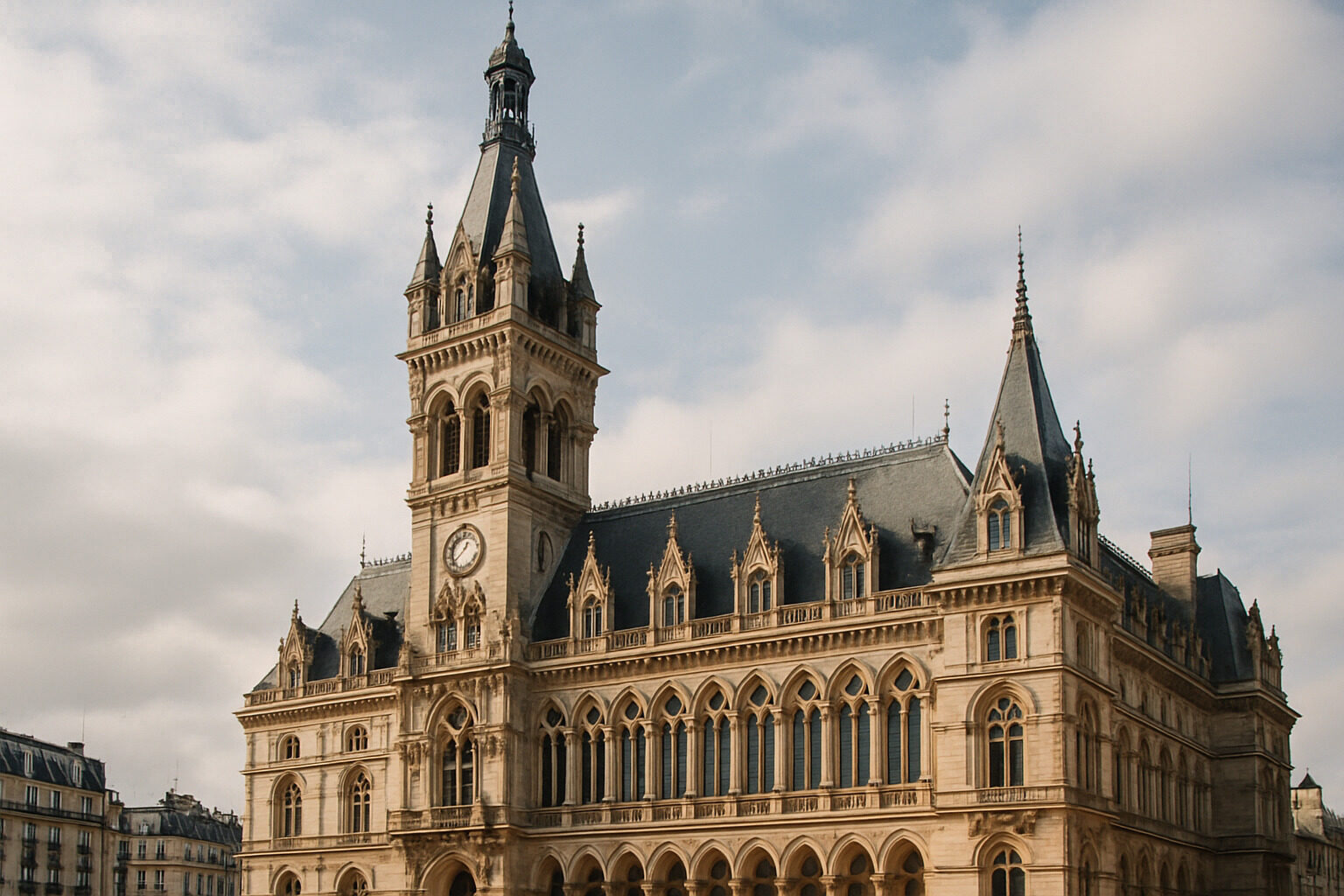
A historical architecture analyzer is an AI tool that examines a photo of a building and identifies what you are looking at: the architectural style, the likely era, the characteristic elements, and the historical influences behind them. Point it at a church, a rowhouse, or a downtown facade, and it returns the kind of informed reading that once required an architectural historian. You can try this right now with our AI architecture analyzer: upload a photo and get a full analysis, with the first one free and no account required.
This guide explains how AI style identification works, what a good analysis actually includes, how to photograph buildings for the best results, and, just as importantly, what the technology can and cannot tell you about the buildings you point it at, so you can use its answers with appropriate confidence.
How AI Identifies Architectural Styles From a Photo
Modern vision-language AI models are trained on enormous collections of images and text, which include vast quantities of the world's architecture, photographed, labeled, and discussed. From that exposure, they learn the visual signatures that define styles: the pointed arches and vertical thrust of Gothic, the symmetry and columns of Neoclassicism, the stepped geometry and sunburst motifs of Art Deco, the raw concrete massing of Brutalism. When you upload a photo, the model reads the building the way a trained eye does, registering the roofline, window proportions, ornament, materials, and composition together, and matches that ensemble of clues against the styles it knows. Because styles blend and evolve, good analyzers reason in probabilities and combinations rather than single labels: a real American main-street building might be read as an Italianate commercial block with a later Art Deco storefront renovation, and that layered reading is often the historically accurate one.
What a Good Analysis Includes
Identifying the style is the headline, but the value is in the breakdown. An analysis from our architecture explorer typically covers:
- Primary style and era. The dominant style and the period it suggests, with secondary influences when a building mixes vocabularies, as most real buildings do.
- Characteristic elements. The specific features driving the identification: arch types, column orders, window patterns, rooflines, ornament, so you learn the vocabulary, not just the verdict.
- Materials and construction clues. What the visible materials, brick bonds, stone, timber, concrete, curtain wall, imply about period and building culture.
- Historical context. Where the style came from, what ideas it expressed, and how this building fits or bends the tradition.
- Design assessment. Notable compositional moves, proportion, rhythm, symmetry or its deliberate absence, that make the building work.
A Field Guide: Styles and Their Telltale Signs
Part of the fun of using an analyzer is learning to see the clues yourself. A few of the most recognizable styles and their signatures:
| Style | Typical era | Telltale features |
|---|
| Gothic / Gothic Revival | Medieval; revived 18th-19th c. | Pointed arches, tracery, pinnacles, vertical emphasis |
| Georgian / Neoclassical | 18th-early 19th c. | Symmetry, columns and pediments, sash windows, restrained ornament |
| Victorian (Queen Anne and kin) | 19th c. | Asymmetry, turrets, bay windows, decorative woodwork, patterned cladding |
| Art Nouveau | c. 1890-1910 | Flowing organic lines, floral motifs, curved ironwork and glass |
| Art Deco | 1920s-1930s | Stepped forms, zigzags and sunbursts, stylized low-relief ornament |
| Modernist / International Style | 1920s onward | Flat roofs, ribbon windows, white or glass planes, ornament stripped away |
| Brutalism | 1950s-1970s | Exposed raw concrete, massive sculptural volumes, repeated modules |
| Postmodern | 1970s-1990s | Playful historical quotation, bold color, exaggerated classical fragments |
An analyzer effectively puts this whole table, and far more nuance, behind every photo you take, including the regional variants and transitional hybrids that field guides struggle with. It is also comfortable with the unglamorous majority of building stock: not every structure is a landmark, and identifying the style of an ordinary 1920s shopfront or a postwar suburban house is often more useful, and harder to look up, than identifying a famous cathedral.
Who Finds It Useful
- Travelers turning a city walk into a guided architecture tour, one photo at a time.
- Homeowners and buyers identifying the style and likely period of a house to inform renovation choices that respect its character.
- Students and enthusiasts building visual literacy faster than textbook study alone allows, with instant feedback on real buildings.
- Real estate professionals describing listings accurately, "Folk Victorian with Italianate brackets" sells better than "charming older home."
- Preservation-minded residents documenting local building stock and articulating what makes it worth keeping.
How to Photograph a Building for the Best Analysis
- Shoot the whole facade. The composition, roofline, and proportions carry style information; a crop of one window discards most of it.
- Prefer a straight-on or slight angle. Extreme perspectives distort the proportions the AI reads.
- Favor even daylight. Harsh shadows and night shots hide ornament and materials.
- Minimize obstructions. Trees, vehicles, and scaffolding literally cover the evidence.
- Add detail shots when a feature intrigues you. After a full-facade analysis, a close-up of a doorway or capital can go deeper on that element.
None of these are strict requirements, the analyzer will make sense of imperfect snapshots, but each one gives it more evidence to work with, and the difference shows in the depth and confidence of the analysis you get back.
Honest Limits
AI analysis is a powerful reading of visual evidence, and only that. It cannot see a building's interior, its documents, or its renovations beneath modern cladding; a Victorian house re-skinned in vinyl may read younger than it is. Style and age are also not the same claim: styles were revived repeatedly, so a Gothic-looking church may be nineteenth-century Gothic Revival rather than medieval, and a good analysis will hedge exactly there. For legal, insurance, or preservation determinations, treat AI output as an informed starting point to verify against archives, deeds, and local historians, not as a certification. Used with that understanding, it is the fastest architectural education available.
Try It on the Next Building That Catches Your Eye
The best way to understand what an analyzer can do is to feed it a building you are curious about, the odd house on your street, a facade from your last trip, your own home. Upload a photo to the AI architecture analyzer; your first analysis is free, with no account needed, and results arrive in moments. If exploring styles makes you wonder which ones fit your own taste, our style finder quiz will tell you, and if it leaves you itching to design rather than just identify, the AI building design generator lets you put your new vocabulary to work creating buildings of your own. Every streetscape is a history book; the analyzer just teaches you to read it.
See this style on real buildings
Browse our library of AI-analyzed buildings and spot the features from this guide in the wild.
Explore All Styles