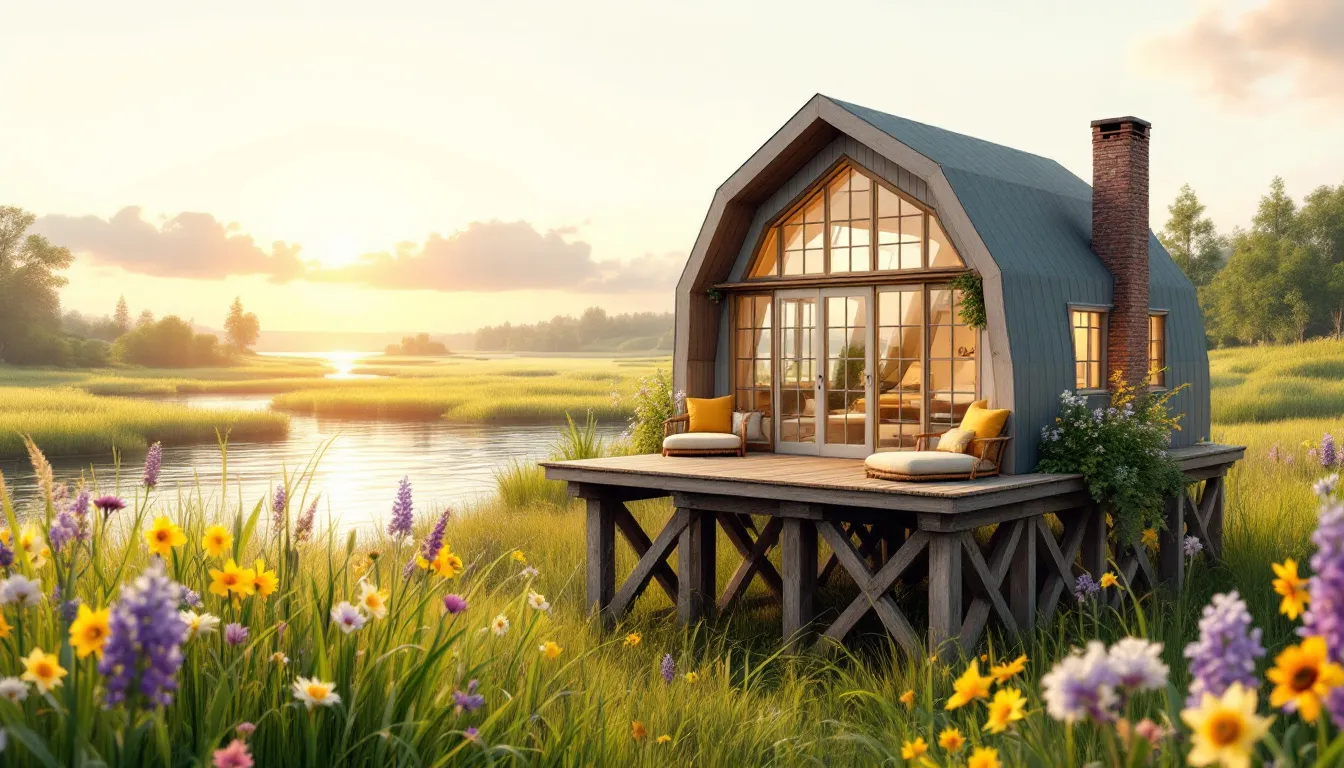
Tiny houses on stilts are compact homes elevated on raised platforms, typically 100-400 square feet in size. They offer:
Flood protection
Better views
Improved airflow
Extra usable space underneath
Key benefits:
Stay dry during floods
Enjoy panoramic views
Get more privacy
Create storage or living space below
Popular foundation types:
Type
Best for
Stability
Deep post
Uneven ground, wind
High
Pier
Slopes, wet soil
Medium
Pedestal
Style, easy utilities
Medium
Eco-friendly features:
Minimal land impact
Energy-efficient design
Use of sustainable materials
Building tips:
Focus on strength and safety
Keep the design simple
Choose durable materials
Tiny houses on stilts combine smart living with environmental consciousness, offering a unique solution for those seeking a simpler, greener lifestyle.
Design your own version
Describe the home you are imagining and our AI turns it into concept images in seconds. Your first design is free.
Generate a Design
Why choose a tiny house on stilts?
Tiny houses on stilts aren't just cool-looking - they're practical too. Here's why you might want one:
Stay high and dry
Stilts keep your home above the danger zone:
No more worrying about floods
Your stuff stays safe from water damage
Bye-bye, moisture problems
In Caye Caulker , Belize, most houses are on stilts. It's not just for floods - it keeps people above the mosquito-heavy areas. Smart, right?
Views for days
Living up high has its perks:
Panoramic views? Check.
More privacy from nosy neighbors? You bet.
Feel like you're in a treehouse? Absolutely.
Custom homes near Ponte Vedra Beach, FL are taking advantage of this. Builders there call the views "grand" - and they're not exaggerating.
Fresh air and sunshine
Being elevated isn't just about looks:
Better airflow throughout your house
More natural light pouring in
It can even be cooler in hot weather
Make the most of your space
That area under your house? It's not wasted:
Store your stuff
Park your car
Create an outdoor hangout spot
Under-House Use
What You Get
Storage
Dry, organized space
Parking
Protected vehicles
Outdoor Living
Extra usable area
A tiny house on stilts isn't just a home - it's a smart living solution.
Planning your tiny house on stilts
Let's break down planning your tiny house on stilts into three key areas:
Strength and safety
Your stilt house needs a rock-solid foundation:
Four strong posts anchored in the ground
Ground sleeve sockets for extra stability
Quick-drying concrete to secure posts
For a 2m x 2m base:
Item
Quantity
Purpose
Ground sleeve sockets
4
Anchor posts
Quick-drying concrete
2 bags
Secure posts
Design
Keep it simple:
Four posts
Wooden boards for floor, sides, and roof
Gable roof for classic look
Want a playhouse? Add a slide or swing set. But remember: simpler = easier to build.
Materials
Wood is key. Options include:
Spruce: Cheap, needs protection
Larch: Pricier, weather-resistant
OSB boards: Easy to paint, install in big sections
For a 2m x 2m stilt house:
Material
Quantity
Cost (£)
Squared timber
10
225
Wooden boards
45
450
Countersunk bolts
Lump sum
20
Wood glaze
3
45
Total
740
DIY project total: about £810 (including foundation materials).
Your planning choices shape your build. Keep it simple, use strong materials, and your tiny house will stand tall.
sbb-itb-1be9014
Types of bases for raised tiny houses
Picking the right foundation for your tiny house on stilts is key. Here are three common types:
Deep post foundations
These use big timbers set in concrete-filled holes. They're good for:
Uneven ground
Windy areas
Flood-prone spots
Ryan Mitchell from The Tiny Life says: "Deep posts are super stable, but you'll need to plan carefully and maybe get a pro to install them."
Pier foundations
Piers are vertical supports driven into the ground. They work well for:
Slopes
Wet soil
Places where you can't dig much
Real-life example: A Florida homeowner built a 400 sq ft tiny house on piers in 2022. It's 8 feet up to dodge storm surges.
Pedestal foundations
These use concrete or steel pedestals. People choose them for:
Looks
Easy utility access
Adjustable height
Tiny House Foundations says: "Pedestals are a nice middle ground. They're stable, look good, and are easier to set up than deep posts."
Here's how they stack up:
Foundation
Cost
Stability
Setup Difficulty
Best Use
Deep Post
High
High
High
Floods, high winds
Pier
Medium
Medium
Medium
Slopes, low impact
Pedestal
Low-Medium
Medium
Low
Style, easy utilities
How tiny houses on stilts help the environment
Tiny houses on stilts aren't just cool - they're eco-friendly too. Here's how:
They're gentle on the ground
By lifting houses off the ground, we:
Keep natural habitats intact
Let water drain properly
Don't mess with soil and plants
In flood-prone areas, these homes are lifesavers. They stand tall when water rises, protecting both people and nature.
They're energy-smart
Stilt houses are built to save energy:
Air flows freely, so you need less AC
The space underneath keeps things cool
This clever design cuts energy use. In Myanmar, traditional stilt houses use 30% less energy for cooling than regular homes. That's a big deal!
They use earth-friendly materials
Many tiny stilt houses are built with materials that Mother Nature loves:
Material
Why it's good
Where it's used
Bamboo
Grows fast, eats up CO2
House frame, floors
Teak
Lasts long, rarely needs replacing
Outside walls
Rattan
Grows back quickly
Furniture, decor
These materials often come from nearby, cutting down on transport pollution. Plus, they grow back fast and don't need much processing.
"Bamboo is a climate change superhero. It sucks up tons of CO2 from the air", says the Environmental Bamboo Foundation.
So, tiny houses on stilts? They're not just homes - they're little eco-warriors!
Wrapping up
Tiny houses on stilts? They're not just cool - they're smart. Here's why:
They keep you dry when floods hit
You get killer views
They're good for the planet
People LOVE these mini-homes. Here's a quick breakdown:
Perk
What it means for you
Flood-proof
Your stuff stays dry when it pours
Awesome views
Wake up to scenery, not your neighbor's fence
Peace and quiet
Say goodbye to street noise
Bonus space
Turn the area below into... whatever
Eco-friendly
Less land used, less energy wasted
Building your stilt house? Keep these in mind:
Make it tough (it's gotta handle wind)
Pick a style you dig
Use materials that'll last
These homes aren't just cute - they're SMART. They sip energy and often use fast-growing stuff like bamboo.
Want to live with less junk and more purpose? A tiny stilt house might be your ticket. It's a big step towards living simpler and greener.
Related posts
Design your own version
Describe the home you are imagining and our AI turns it into concept images in seconds. Your first design is free.
Generate a Design